McMahon
Table of Contents
Introduction#
Kerry’s maternal grandmother is Eily Erina McMahon. Her father is John McMahon who was born in Maynooth, Ireland, and who emigrated to Melbourne in 1865. Her mother is Jane Givan who was born in County Tyrone, Ireland and who emigrated to Melbourne in 1859. They were married in Melbourne in 1870, and had 10 children. The following is a family tree of Eily Erina McMahon’s ancestors and descendants.
Family tree: Eily Erina McMahon (fullscreen)
We have a family memoir to help us:
- Trish Meldrum, “Maynooth to Melbourne - Descendants of Matthew Luke Mahon and Margaret Duffy of Maynooth”, 2011 (privately published).
This is a very detailed and comprehensive work, and incorporates a great deal of primary sources and family stories.
Sheila O’Hanlon (a granddaughter of John and Jane McMahon) compiled an extensive set of notes on the McMahon family. She inherited a small collection of letters and documents from her mother, Eily McMahon. I have digitised these and included them in this narrative.
Great-Great-Grandparent Generation#
Luke Mahon (1802-1866)#
Thanks to the Trish Meldrum memoir, we know quite a lot about Luke and his wife.
The family tree of his descendants is quiet impressive.
Family tree: Luke Mahon (fullscreen)
Luke Mahon was born and resided all his life in the town of Maynooth, which is 24 km west of central Dublin. In 1795, Maynooth was selected to be the site of St Patrick’s College, established to train the Catholic clergy. This institution, commonly known as Maynooth College was by 1850 the largest seminary in the world. The student body fluctuated between five and six hundred. This was clearly a good place to be a tailor, as there was a large pool of customers for standard outfits for seminarians and for newly-ordained priests. It was the Oxford and Cambridge culture of “town and gown”, writ small.
The original Maynooth is a townland, in the Electoral Division of Maynooth, in the Civil Parish of Laraghbryan, in the Barony of North Salt, in the County of Kildare.
For birth, death and marriage records, we have civil records that start in 1865. Before that Catholic parishes provide baptism and marriage records.
About Ireland, Catholic Parish Registers, 1655-1915
The Ireland Catholic Parish Registers is the single most important collection needed to trace your Roman Catholic ancestors in Ireland in the 1800’s. According to the 1861 census, almost 78 percent of the population was Catholic; by 1891, this had risen to 89 percent. This collection is made up of baptism, marriage and death records from over 1,000 Catholic parishes across the whole of the island of Ireland - both in the Republic of Ireland and Northern Ireland, as it is known as today. While baptism and marriage records make up the majority of the collection, death records can be found primarily for parishes in the northern regions.
Approximately 94 percent of Catholic parishes are included in this collection, though not all registers from these parishes are available. For more information, visit the National Library of Ireland website at registers.nli.ie.
It is worth noting that, while the Church of Ireland was the established state church from 1536 to 1870, an overwhelming amount of the Irish population remained Roman Catholic throughout this period. Irish Catholic Emancipation was secured under the Roman Catholic Relief Act in 1829, lifting legal restrictions that were previously in place against all Catholics. By this time, Penal Laws were also lifted, which had forbidden the Catholic Church to maintain parish registers.
Catholic Emancipation brought more freedom to record vital events within the Catholic Church. As such, the bulk of the records in this collection date from the late 1820’s onwards. Where some earlier registers exist back to the 1650’s, they are known to cover the more prosperous and anglicised eastern counties of Ireland.
The records are written in either English or Latin. For help understanding the Latin entries please see our helpful glossary of common terms.
The indexes to this collection have been created from approximately 367,000 digital images made available for free by The National Library of Ireland. In keeping with the ethos of The National Library of Ireland efforts, the images in this collection are also available for free on this website. The index has been created and the images published by Ancestry under the National Library of Ireland’s Terms of Use of Material.
We have their marriage record. The direct link into the National Library of Ireland site is here. The record is the second from the top on the left-hand page. It is handwritten in church Latin:

Augusti 1825
24 Luca Mahon in matrim. Duxit
Margaritam Duffy testibus Jacoba
Green & Anna Coffey
I take this to translate to
On 24 August 1825 Luke Mahon joined in matrimony with Margaret Duffy. Witnesses: James Green and Anne Coffey.
Their first child Matthew was born a year later. We have his baptism record. It is the third-last on the right-hand page. Again, handwritten in church Latin, and somewhat cryptic.

AD 1826. Julii.
23 Mathous Luco Mahon & Margarita Duffy Conj.
SS. Michaeli Carpenter & Margarita Anthony
I take this to translate to
Baptised on 23 July 1826: Matthew. Parents Luke Mahon and Margaret Duffy (married). Sponsors: Michael Carpenter and Margaret Anthony.
Somewhat amazingly, the entire collection of parish records has been subjected to character recognition (or human transcription) and has been fully indexed. Searching this index on Ancestry.com gave hits to the baptism records of all nine children. I needed to scroll the marriage images to find the marriage record, however. It can be found by searching for “Luke Maher” (indexing is never perfect).
Trish Meldrum’s memoir provides a transcription of the Mahon family headstone in Laraghbryan cemetery. This gives us dates for the death of Luke and his wife Margaret, and tells us that four of the nine children died young. In fact, Margaret died several days after the baptism of the last child. We assume that the child did not long survive.
Of the five surviving children, the oldest, Matthew, stayed in Maynooth and carried on the trade (tailoring) of the father. The other four emigrated to Victoria.
Robert Givan (1790-1878)#
The record allows us to reconstruct quite a detailed story about Robert Givan and his wife Jane Patterson. They were married in county Tyrone, in Ireland, in 1836. They had four children. The family migrated to Melbourne in 1859.
The family tree of Robert’s descendants is quite impressive.
Family tree: Robert Givan (fullscreen)
A discussion board entry (scroll down to the comments) surmises that the Givans were originally Ulster Plantation Scots.
The Givan family brought two testimonials with them, which have survived.
The first testifies their marriage:
These are to certify that on the 29th day of August 1836 Jane Patterson of Fernaghandrum was married to Robert Givan of Gortnacreagh according to the form of marriage of the Presbyterian Church by the Rev Archibald Armstrong late Presbyterian Minister of Clogherny and in the presence of Mr Matthew Moore of Ballyhasky and Mr John Patterson of Fernaghandrum.
Joseph MCasker
Presbyterian Minister
24 September 1858
Here Gortnacreagh is a townland, in the Electoral Division of Mountjoy, in the Civil parish of Cappach, in the County of Tyrone. This is just outside the hamlet of Mountjoy, itself about 10km north of the town of Omagh. Fernaghandrum is a townland in the County of Tyrone, some 10km south-east of Omagh. Clogherny is a parish between Omagh and Fernaghandrum. Ballyhasky (if I have transcribed it correctly) is a townland in the neighbouring county of Donegal.
The second testifies their good standing as Presbyterians:
This is to certify that Mr Robert Givan and family are respectable members of the Presbyterian Congregation of Cross Roads near Omagh in connexion with the General Assembly of the Presbyterian Church of Ireland and our heartfelt prayers and wishes are for their own and their family’s prosperity spiritual and temporal in the land of their adoption, and may Providence preserve and convey them in health and in safety to the place of their destination.
Dated at Cross Roads near Omagh this 1st October 1858.
John Hamilton.
There is a Presbyterian church in Mountjoy, at the junction of two main roads.
The family emigrated to Victoria in 1859. We have the passenger list for the ship Greyhound. They are half-way down the second page, as
| name | age | calling |
|---|---|---|
| Robt. Given | 55 | labourer |
| Jane " | 40 | wife |
| Anne " | 20 | spinster |
| John " | 18 | labourer |
| Mary " | 11 | child |
| Jane " | 8 | child |
They are all “Irish”, and are contracted to land at Melbourne. Robert’s real age was 68 and Jane’s was 48 (according to information on their headstone in Melbourne Cemetery).
The Argus of 10 January 1859 reported
January 9
Greyhound, Black Ball ship, 1,412 tons, John Davies, from Liverpool October 9. Passengers—cabin : Misses Young (2), Miss Hatchell, Sir E. Poole, Bart. ; Messrs. Smith, Burke, J. Farmer, Miller, Goode, Beggs, Reddeth ; and 310 in the intermediate and steerage. Mackay, Baines, and Co., agents.
The family lived in South Yarra. Rate books give us the following information:
| date | Occupier | Address | Occupation |
|---|---|---|---|
| 1864 | Givan Robert | Caroline St | Gardener |
| 1868 | Givan Robert | Davis St | Gentleman |
| 1869 | Givan Robert | Davis St | Labourer |
| 1870 | Givan Robert | Davis St | Gardener |
| 1871 | Givan Robert | Davis St | Gentleman |
Robert rented the first property, but is listed as the owner of the second property. It was a 6 room wooden house, with a slate roof. It was apparently called MountJoy Cottage, after their home town in Ireland. A confirmation of the first address is confirmed by the following report in the Telegraph, St Kilda, Prahran and South Yarra Guardian of 6 August 1864:
Robert Givan was charged with allowing his goat to wander in Caroline-street on the 30th ult. Defendant denied the ownership of the goat. Constable Rogers stated the daughter of the defendant had sent a boy to claim the goat as the defendant’s property. Case postponed till Monday next, for the production of the daughter.
South Yarra borders the Royal Botanical Gardens Victoria. The site was chosen in 1846, and were well underway in the 1860s. Perhaps Robert Givan worked there as a gardener. I take that the occupation of “gentleman” meant that he was no longer working and was living, presumably, on his investments.
His wife Jane died in 1862, after only three years in Melbourne. We have a brief note by her daughter Jane:
Grandfather Patterson’s crest is two eagles (back to back).
My mother died on Sunday morning at 3 o’clock November 29 1862 of sunstroke one weeks illness. At Davis St., South Yarra.
Robert would have brought up the two younger girls, who were still teenagers when Jane died. His children married in 1865, 1867, 1870 and 1881, and presumably lived at home until they married. Robert himself died in 1878, at the remarkable age of 88.
Sheila’s collection includes a curio, namely, a nice example of a Victorian Valentine card. It seems to be addressed to
Miss A Patterson
Clogher
Here Clogher is the civil parish containing Fernaghandrum. It does not carry a postage stamp, so predates the modern postal era (1840). It may have been hand-delivered. The logical conclusion is that it was sent by Robert to Jane, before their marriage.
Great-Grandparent Generation#
Matthew Mahon (1826-1904)#
Matthew followed the tailoring trade of his father, and lived and worked in Maynooth his whole life. He married Mary Jacob in 1868. They had six children, one boy and then five girls. Three girls died very young in 1876, and a fourth girl died in 1882, aged ten. There must have been some childhood disease that was common to these tragic deaths.
We have the 1901 census record. Matthew is aged 74, his wife Mary is aged 61, and son Luke (aged 30) lives with them. Luke is carrying on the family trade, of Merchant Tailor.
Luke McMahon married Mary Ann Colclough in 1908. He says he is 38, but 39 might be more accurate. He didn’t rush into marriage. Mary Ann says she is 25.
We have the 1911 Census record. They have been married for 3 years, but he is now 40 and Mary is now 35. The Irish were perhaps a little flexible when stating their ages.
They seemed to have a single child, Imelda Mary, in 1914. With her the long line of McMahon tailors in Maynooth came to an end. She seems to have married in 1939, and the family moved to Huddersfield, West Yorkshire. They had six children, though only the oldest is shown in the family tree. The Maynooth connection was over.
In 1901 the surviving daughter Teresa seems to be working in Dublin, if this census record is appropriate. She does not appear in the 1911 census under her maiden name. I have not found any marriage record, or any death record.
Patrick McMahon (1834-1913)#
Patrick emigrated first, in 1861. He arrived in Melbourne on the Green Jacket, on 27 March 1861. In the passenger list he is “Patrick Mahon”, is Irish, a “labourer”, and states his age as 26 (which is correct).
He seems to have disappeared from the record, apart from a cryptic death notice in the Age of 12 February 1913:
M’MAHON. On the 8th February, at the residence of his sister, Mrs. M. Sullivan, 13 Alfred Crescent, North Fitzroy, Patrick M’Mahon. Interred privately.
This is his sister Margaret. He appears to have lived as an Irish bachelor. His death certificate says he is a “tailor”, which is likely enough coming as he does from a family of tailors. There is one “Patrick McMahon” in the Melbourne ratebooks, but his occupation is consistently listed as “labourer”, so I have judged it is not our Patrick McMahon. Maybe it is, and he preferred not to follow the tailoring trade.
His age details are inconsistent. By my reckoning he was 78 when he died, whereas his death certificate says 72. However, his death was reported not by a family member but by an “authorised agent”, perhaps the undertaker.
Sarah McMahon (1832-1903)#
Sarah, Margaret and John emigrated together. They arrived in Melbourne on the Southern Ocean, on 18 February 1865. The passenger list shows them on the same ticket, giving their ages as 26, 23 and 16. Sarah would seem to be more like 33, while the others seem correct. It seems clear that that one could travel without any formal documentation. Indeed, there was no system of formal documentation. Perhaps one could carry a letter from the parish priest, or perhaps a letter of introduction from a patron. For common folk, giving an age to the shipping company could be a matter of what age you would like to be, rather than the age you actually were. At 26, Sarah perhaps had better marriage prospects that at 33.
The Age of 11 February 1865 reported
Queenscliff, 10th February.
The ship Southern Ocean, 93 days from Liverpool, has been detained in quarantine. She has 330 passengers on board. Thirteen deaths are reported during the voyage of fever. The ship is reported very dirty.
In the event, the ship was released from quarantine, and the Age editorialised mightily against the fact. A later article on 23 February 1865 discussed fever in the colony:
The introduction of that virulent disease, typhus fever, into the colony by the ship Golden Empire is now a fact established beyond all doubt, and has led to some correspondence between Dr. Macadam, the health officer, and the local health officer at Hotham relative to the fever cases in that district, by which it appears clearly that sick persons were allowed to land from that vessel, and that the disease had spread in consequence. Reports from various parts of the country, where passengers from the Golden Empire have gone to, have come down to Melbourne, which show that the seeds of disease were widely disseminated amongst her living freight, as in many instances that insidious disorder had broken out in a violent form. Since then the ship Southern Ocean, from Liverpool, arrived in the Bay, having fever prevalent amongst her passengers, and was very properly detained until Saturday last in quarantine. The Great Britain arrived in Hobson’s Bay on the 17th, and, having had a case of small-pox on board at an early period of her passage, was detained in quarantine until it was discovered that she was perfectly clean and had no sign of infections disease on board. It is to be hoped that the precautions which have been adopted will prevent a recurrence of a similar infliction to that with which we have been visited, and from the dire effects of which we have so narrowly escaped, and that such measures will be taken as will render all similar negligence as that displayed a short time since impossible.
Sarah, the oldest of the four McMahon siblings in Melbourne, was the first to marry, some two and a half years after they arrived. The lucky groom was one Thomas Kiernan who also came from County Kildare. Perhaps he even had a Maynooth connection. He seems to have been 22 or 23, while his bride was 35. Perhaps he never knew.
The marriage record (provided in Trish Meldrum’s memoir) is informative. Thomas is a “labourer”, aged 23 (which seems correct). Sarah is a “domestic” aged 26 (the same age she claimed when she got off the boat two years before). And Thomas would seem to not be able to write. He signed the record with a neat cross. His will written in 1916 again has him signing with a cross, with the document stating that it is
signed by the said testator by his affixing his mark hereto he being a marksman.
After all that, the marriage was highly successful. They has six children in the next ten years. Sarah died in 1903, aged 71 by my reckoning, and Thomas died in 1916, also aged 71 according to death record. The Argus of 27 July 1903 carried the brief notice:
KIERNAN. On the 25th July, at her residence, Alfred-crescent, North Fitzroy, Sarah, the beloved wife of Thomas Kiernan. Requiescat in pace. No flowers.
while the Argus of 2 November 1916 reported
KIERNAN. On the 1st November, at his residence, “Maynooth,” Alfred crescent, North Fitzroy, Thomas, the dearly beloved husband of the late Sarah Kiernan, and beloved father of William, Margaret, Mary, Sarah, Thomas, and Christopher Kiernan.
In the Melbourne ratebooks, Thomas describes his occupation as “labourer”, and then “yardman”. In his will he is described a a “retired foreman”.
The Kiernans were a tribal group. The Electoral Roll for 1912 is interesting. Thomas (yardsman) along with his daughters Mary (dressmaker) and Sarah (home duties) lived at 13 Alfred Crescent, North Fitzroy. His son William (carpenter) and daughter Margaret lived next door at 15 Alfred Crescent. His son Christopher (clerk) and his wife Helena live at 63 Fergies Street, less than 400m away. His son Thomas Joseph (designer) and his wife Harriet live at 723 Brunswick Street (about the same distance).

Margaret did not marry, and was still living at 15 Alfred Crescent when she died in 1948. William married, but seemed to have moved back to live with his sister after his wife died in 1936. He was living there when he died in 1945.
Margaret McMahon (1841-1931)#
Margaret emigrated from Ireland in 1865, with her brothers Patrick and John, and her sister Sarah. She married William Sullivan in 1883. They had one child, Daniel, who died aged 8 months in 1885.
William Sullivan was 15 years older than Margaret, and had been married before. He had emigrated from Ireland in 1852 with his mother and two siblings. He married Anne Briscoe in 1861. Anne died in 1865, leaving him with two sons (John and Eugene). He died in 1901. The Argus of 21 January 1901 reported
SULLIVAN. On the 19th January, at his residence, 72 Alexandra-parade, Fitzroy, William, the dearly beloved husband of Margaret Sullivan, and father of John and Eugene Sullivan, R.I.P.
We have his will. He left the considerable sum of £8500, He left a property portfolio, including the General Gordon Hotel in Brunswick Road, Fitzroy, split carefully between his wife and his sons. In the probate documentation he is described as “William Sullivan, Gent”. I take this to mean that he had retired, and lived on his investments.
Margaret’s bachelor brother Patrick came to live with her after her husband died. Patrick died in 1913 and Margaret died in 1931 at the age of 90.
John McMahon (1846-1918)#
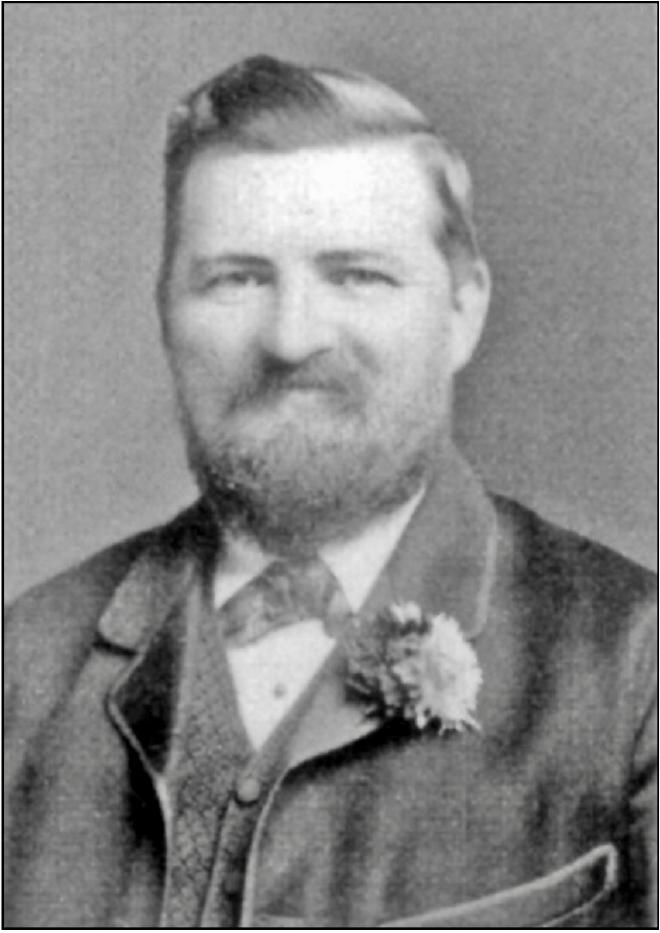
John McMahon was a man of immense energy and considerable accomplishment. He arrived in Melbourne in 1865 having been trained as a tailor like his father. He married Jane Givan in 1870 and they had ten children, eight of whom reached maturity. They lived in North Fitzroy for most of their life. He was extremely active in public affairs, and John was twice Mayor of Fitzroy. He made a lot of money in the boom, lost a lot of it in the crash of 1893-1894, and subsequently regained some of his wealth. Jane died in 1915 and he died in 1918, at the age of 71.
We have
a detailed narrative in Trish Meldrum’s memoir,
a report in a History of Fitzroy site, and
a report on Edinburgh Gardens, North Fitzroy, which covers more generally North Fitzroy and the place of several of John McMahon’s buildings.
an article in Table Talk of 10 May 1889, that provides a biographic summary to that date.
a profile in Table Talk of17 October 1901, in its series a Anecdotal Photographs, no. XIX.
This profile attests:
Among the most prominent of public men who have attained municipal, though not yet parliamentary distinction, may be classed John M’Mahon, the popular ex-Mayor of Fitzroy. Though the sphere of his operations has been limited to local requirements, nevertheless he has succeeded in impressing his individuality on a much larger area, and it is safe to say that few men are more intimately known in Melbourne.
It gives a generous character assessment:
John M’Mahon needs little introduction to those who are at all acquainted with the public men of Melbourne. Few indeed are better known than the genial, rollicking Irish man, who retains the best characteristics of this energetic race. What does it matter if all his opinions are not agreed to? what does it matter though he insists on them with true Celtic exaggeration ? Everyone must recognise the sincerity and enthusiasm of the man, who always fights fairly and squarely, without fear or favour. John M’Mahon has not reached middle age, but he still retains all the fire of his youth. He has a rich flow of language, and a still richer flow of humour; he has travelled much, and has read more; he has a distinctly original personality; and though he has accomplished much, there is every probability that he will accomplish still more.
It provides a brief financial summary:
For the first nineteen years of his business career he made satisfactory financial progress. During the whole period he never renewed or discounted any man’s bill or forfeited money payments. With Mr. Sam Lyons and Sir George Turner (now Treasurer of the Commonwealth), he made many speculations in the land boom, among others building his mansion house in Alfred Crescent. However, he eventually lost the savings of a lifetime, which were considerable, and to-day he stands practically in the same position as when he first landed in Victoria. But Mr. McMahon faces adversity squarely, and his Irish temperament admits of no defeat.
It provides several personal anecdotes.
Mr. M’Mahon takes a great pride in his library. “I never part with a book,” he says, “and I have all the works I bought in early youth. I have never bothered about novels, and though I have a fairly wide selection of literature, I have not a single yellow back on the shelves. I believe that I possess the best Ruskin library in Victoria, and my favourite studies are history, social science, travel and poetry.” Lawrence Sterne is one of Mr. M’Mahon’s greatest favourites, and at a municipal meeting, after some discussion, he told of the origin of a “cock and bull” story which occurs in Sterne. “Adam Lindsay Gordon is Australia’s best poet,” says the ex-Mayor, who is never tired of quoting the dashing lines of the melancholy Englishman who interpreted the spirit of the Australian bush so sympathetically. Mr. M’Mahon says that sometimes, after chapel on Sunday, he will sit by a window and read for about twelve hours at a stretch, sometimes forgetting even his meals.
His only other hobby is angling, and he is an enthusiastic member of the Anglers’ Club. He is content to sit all day, by a river’s side, provided he only gets an occasional nibble.
The following is now regarded as rather hair-raising, but would not have been so regarded at the time:
Mr. M’Mahon holds decided views on the subject of a “White Australia.” He points out the enormous increase of the Black race in America, and predicts a war of race in the future. He indicates their offences against womanhood, their cannibalism and unbridled passion. “How can anyone who would not allow his own daughter to marry a Black desire anyone else’s daughter to do so ?”
The year 1889 is a good time to take stock of John McMahon.
John, an Irish Catholic, married Jane Givan, who had been brought up as an Irish-Scot Presbyterian. This was a “mixed marriage”, and usually discouraged by both family and church. The fact that John’s family was back in Maynooth and that only Jane’s father was still alive (at the age of 80) would have minimised the family objections. The churches were finessed by having two marriage ceremonies. One, according to the rites of the Catholic Church, was in St. Mary’s Church, St. Kilda and one, according to the Rites of the Presbyterian Church, was in Robert Givan’s house in South Yarra. It is not clear to me that the two priests were aware of the arrangement. Two Certificates of Marriage were filled out, surely not what the Victoria Legislature had in mind. John and Jane’s ages on one record were slightly different to their ages on the other. Was this to muddy the record trail a little?
By 1889 Jane had given birth to nine children, first seven girls and then two boys. Two girls had died of diphtheria in 1876, aged three and one.
His primary commercial activity was a tailoring business in Fitzroy. The size of this business is indicated by the following report in the Age of 7 January 1879:
The annual picnic given by Mr. John M’Mahon, Fitzroy, to his employees, took place on Thursday, the 2nd January, at Mordialloc. The company numbered over twenty-five. Cricket, dancing and other outdoor amusements were freely indulged in. The company returned to town by the half-past ten train, having thoroughly enjoyed themselves.
His main passion was local politics, and he was elected to the Fitzroy Council in 1877 and was Mayor for 1881-1882. Both were covered in the Fitzroy City Press of 8 September 1883:
Visitors of Brunswick-street would lose nothing by giving a look at Mr. J. McMahon’s window, Victoria House. It contains a very fine show of tweeds, coatings, scarves, ties, hats, studs, cricketing pants, braces etc., and is most artistically decorated. At night his massive and handsome chandelier lends a very pretty appearance to the display.
The arrangement for a presentation to Cr. McMahon have now been completed, and, we are glad to announce, most satisfactorily. A really magnificent gold watch, chain and locket have been purchased, valued at £110, and will be presented on Thursday evening next. The watch, which is a Waltham one of the finest description, is jewelled in every hole, with chronometer stop movement . The chain is of 18 carat gold, and weighs about six ounces. The locket has been specially made for the occasion, and raised on one side is the monogram of the recipient, whilst in the obverse an emerald has been set. Altogether the presentation is one that any man might feel honored in receiving, and worthily marks the esteem in which ex-Cr. McMahon’s past services are hold by many prominent citizens.
He had in fact lost his seat of the Council, due largely to a whiff of secularism (he being an Irish Catholic). He went out in style, giving a lavish dinner to his supporters. This was reported in detail in the loyal Fitzroy City Press of 18 August 1883. The dinner featured jeroboams of Creme de Bouzy, perhaps the first Australian champagne. Brickbats were thrown at the Age newspaper, which was regarded as strongly anti-Irish.
In the same year he was instrumental in the foundation of the Fitzroy Football Club and was the first club president for the period 1884-1887 (a signal achievement in Melbourne terms). Fitzroy was merged into the Brisbane Lions.
In 1888 he regained his seat on the Fitzroy Council, and again gave a dinner for his supporters (this time in the Temperance Hall, sans champagne). The Mercury and Weekly Courier of 24 August 1888 reported the speeches, which included:
After the usual loyal toast had been proposed and honored, Cr. McMahon proposed “Continued prosperity to Fitzroy.” The prosperity of Fitzroy during the last ten years was remarkable. He remembered well about sixteen or seventeen years ago chasing a hare on the very spot where the Temperance Hall stood. Warming’s Hotel was then spoken of as being in the far North. That big hotel, the Park View, was offered to him (Cr. McMahon) at a rental of 10s. per week, and a guarantee that if he took a lease of it for five years he could have the first year’s tenure without payment. Well, later on that hotel was sold for £1200, then it changed hands a few years afterwards for £12,000, and now £20,000 would be refused for it. (Cheers). All this only showed how the district had been going forward. Land had increased wonderfully in price, and he trusted that the progress of the district in the future would be equal to that of the past. (Cheers).
The land boom of the eighties clearly had everybody excited. John McMahon’s activities can be identified, at least partially.
In a brief obituary the Herald of 2 April 1918 tells us
In the land boom time Mr M’Mahon, in conjunction with the late Mr Samuel Lyons (Lyons and Turner, solicitors), placed a number of properties, which they had acquired, on the market. These properties were mostly about Fairfield, Northcote and adjoining districts, and when they were sub-divided and offered for sale, attracted considerable attention.
A roving columnist for the Fitzroy City Press of 24 October 1885 relates an auction of land by McMahon and Lyons.
AN AFTERNOON AT A LAND SALE, " What is there in a name" someone has asked. Well, there is a good deal, and one that I have seen recently struck me as peculiar. On the hoardings, on placards, on handbills, in advertisements, cropping up before me where ever I went, I came across “Woolton Park.”
I resolved to see what there was attractive in the name of Woolton, and accordingly I volunteered as an inside passenger in the comfortable four-horse drag provided by the vendors. This with about half a dozen other vehicles, on the day of sale drove round Fitzroy, Carlton, and Melbourne, and to the ground by way of the Heidelberg Road and High-street, Northcote. As we slowly climbed Rucker’s Hill a fellow passenger commenced to distant upon the wonderful transformation which the new Merri Creek bridge will effect. Imagine, he said, “a straight line from Preston, yes, from Whittlesea to Melbourne. Imagine all hills done away with. Imagine a new city, the centre of which is Woolton Park and Thornbury Park. Imagine people locking to the most salubrious spot near Melbourne, and you will get an idea of what will follow on the heels of the new bridge.” “You seem to think a lot of that bridge, my friend,” I said. “I should rather think so. That is what’s bringing me out today. I can see that the bridge and the township which comes within fifty yards of the bridge, are going to make the district over the creek. I expect to get some of this Woolton Park land for about 30s a foot, and I would like to know where you will buy land within a similar distance of Melbourne for anything like the money.” “Hold hard,” I cried, " don’t sing the praises of the locality so loud." “Have you ever seen the place” he asked? “Never,” I answered, with which he was off again, and in a few moments he was in the midst of a glowing description of the gentle slope, the magnificent drainage, the splendid depths, the frontages to St. George’s Road and to High street, the grand views to be obtained from the crown of the hill, the enhancement of value that would ensue from the making of the Whittlesea railway, which passes beside the land, in close proximity to which the station is to be, and certain other advantages possessed by the famous Woolton. “Ah,“I remarked, sceptically, “you seem to take a great interest in this land.” “I do take an interest in it. I know a good thing when I see it, and I mean to be in it if I can. I am one of those who have suffered by the neglect which this district has experienced all along from the Government, and I am glad to see the revolution which is now taking place. I want to make up for lost time. too, and I think buying this cheap land the best way of doing it. It’s bound to rise, because it is now at its lowest ebb. The advantages which it will shortly have are only beginning to be appreciated, and do not command anything like the value which they will have before very long.” The end of this speech brought us to the ground, and I may say for the benefit of my readers that my friend afterwards bought no less than ten lots, thus fully confirming his opinion by his action.
On the ground I found a fine booth erected, with the flag of Messrs Langridge and Son, the auctioneers, proudly floating overhead. The vehicles discharged their loads with remarkable rapidity, and with an equal haste the crowd made for the booth. “Why all this hurry,” I queried. “Lunch and whisky,” laconically explained a tall, lank individual, as he dived under the canvas. The way those sandwiches and liquor disappeared was truly awful, and the first ten minutes were devoted to the caterer with a singleness of purpose which earned my unqualified admiration. Nothing like a contented stomach for making a contented mind, I moralised, and the arrangement no doubt is a happy one for all concerned.
Looking round. I espied the two vendors, Mr. John M’Mahon and Mr. S. Lyons. Mac–, his impulsive nationality coming to the surface under the influence of the occasion, was beaming all over his countenance; evidently he anticipated a good sale. “Don’t spare the whisky, boys,” he cried. " Give the land a good soaking,” adding, sotto voice, “the harvest will be all the better for it.” Lyons, complacent and phlegmatic, sauntered about, and took things comfortably.
In a little while the Hon. G. D. Langridge, who conducted the sale in conjunction with Messrs Bliss and Perryman, mounted the rostrum, and with a few short taps of his hammer secured attention. The assemblage immediately occupied the seats provided, and I found there was an excellent attendance. The auctioneer rapidly got through the conditions of sale, and commenced the actual selling.
On Saturday afternoon last he realised £6680 for the vendors, which was not a bad three hours’ work. In securing this result he had the active assistance of one of the vendors, the irrepressible M’Mahon, letting his voice be heard from time to time with no uncertain sound. Now in one corner, now in another, he was to be seen, expostulating, cajoling, chaffing, tempting, and explaining, his hands going as well as his tongue ; sometimes his whole body on the move at once, as he indignantly denied something, or in persuasive tones sketched the advantages of the site, the easiness of the terms, or the sure prospect of a profit to the buyers. I thought as I watched him he has mistaken his vocation. He would make a grand auctioneer, for I verily believe he would persuade the handle off a saucepan.
The crowd was very good-humored, and the bidding pretty brisk. The appearance of the ground, and the fact that the roads had been formed, and one of them partly metalled (since entirely done) seemed to satisfy the buyers that the investment was a safe one, and the lots were disposed of at very satisfactory prices to the vendors, but still at figures which give purchasers ample opportunity of making money. The frontages to High-street brought from £3, those in St. George’s-road from £3 5s., whilst those in Woolton Avenue and Shaftesbury Parade realised from £2 to £1 8s per foot. Twenty-eight shillings was the lowest price taken, and some laughter was created by the firm manner in which the vendor refused 27s 6d for the three final allotments, which were passed in by the auctioneers, though they were afterwards sold before the booth was cleared. In a few minutes the vehicles were filled, whips cracked, and we were off again.
If my readers have any desire for a little mild excitement, some very fair fun, coupled with the chance a cheap lot of land; let them go out to the sale at Woolton Park this afternoon. They can get a ride out and back, as I did, and a lunch into the bargain.
An article in the Fitzroy City Press of 5 December 1885 gives a summary of the project. McMahon and Lyons paid £12,000 for the land in September 1885, and had sold the great majority of the subdivided blocks for double that amount. Even with the overheads of whisky and sandwiches for lunches, a good profit would have been realised.
In March 1886, John McMahon was giving a champagne lunch to celebrate his purchase of Job Smith’s estate on the banks of the Merri Merri Creek. It seems that he provided some of this land, at a very cheap price, to the Little Sister’s of the Poor.
The Fitzroy City Press of 3 September 1887
Another extensive land purchase has been made in Northcote by Messrs McMahon and Lyon’s, the Hon. J. Beaver’s estate of between 30 and 40 acres having changed hands to them yesterday. This estate lies between High-street and St. George’s-road, which is at present being very substantially made, and will thoroughly open up the district. The estate has a street on every side, and is one of the most valuable blocks in Northcote. It will shortly be offered to the public in building lots, and should find ready buyers. This is another instance of the enterprise of Messrs McMahon and Lyons’s, and of their confidence in the district.
With remarkable efficiency, the land was being put to auction some six weeks later. The sale was apparently a success:
Mr F. L. Flint reports having held a sale this afternoon of the property known as the “Heart of Northcote” (lately the residence of the late Mr. F. L Beaver), under instructions from Messrs M’Mahon and Lyons. Two thousand persons were present, and 159 lots were readily sold at the following prices: High street, £10 to £13 10s. per foot, St George’s road, £4 17s 6d to £8 per foot. Beaver and Gladstone streets, Beaconsfield avenue, 47s., to 62s. 6d. The total sale was £18,572 17s 1d.
As well as property in North Fitzroy, he had built a country retreat at Gembrook, some 65km south-east of the Melbourne CBD. The house which he called Kincora still exists. An indication of John McMahon’s operating style is given by a report in the Fitzroy City Press of 16 May 1890. It is worth reading in full, but we will give a flavour. It starts:
A TRIP TO GEMBROOK. A DAY’S OUTING.
A VERY pleasant day was spent on Wednesday by a party of between forty and fifty gentlemen at Gembrook, on the invitation of Cr. McMahon. The party assembled at the Princes Bridge station at 7.45, and included amongst the number were the Hons. L. L. Smith and A. L. Tucker, Messrs. Best and Turner, M.L.A’s., the majority of the Fitzroy Councillors, and many well known city men. Pakenham was reached at 9.30., and here the President of the Shire, Cr. Ramage, and Crs. D. and T. Bourke, Mr J. Kitchen, junr., and many other local residents were in waiting with traps, buggies and other private conveyances, which were placed at the disposal of the visitors for the day. “Kinkora,” the country residence of Cr. McMahon, was reached about 10.30., and a very fitting commencement was made with a substantial breakfast, which was partaken of under the blue.
They toured the district, returned to Kincora, partook of more refreshments, and toured some more. A group photograph was taken.
On returning, the party sat down to a substantial lunch, the catering arrangements being in the hands of Mr. J. Shannon, of Fitzroy. The toast of “The Host” was proposed by the Hon. L. L. Smith, who expressed his surprise at the splendid scenery and rich soil of the district. He had spent one of the pleasantest days of his life, and cordially thanked Cr. McMahon for affording him the opportunity. In responding, Cr. McMahon stated that he had always had a great opinion of the Gembrook district, and nothing pleased him better than to spend a few days - or a few weeks - amongst its beauties. It was indeed, a dreamland, and he came back to it every time with stronger feelings of pleasure. He was always pleased to have the companionship of his friends on such occasions, and would at all times be glad to arrange a little trip with anyone present. He thanked them cordially for giving up their business and other engagements to join in the party.
Other toasts were made, and responded to. The heavy word was put on the local member (who was of the party) to support the extension of the rail line from Pakenham. The report concluded:
The health of Mr. Caire was proposed by Mr. Balderson, who thanked that gentleman for his voluntary efforts in securing photographic mementos of the trip. Mr Caire’s acknowledgement brought the lunch to a conclusion, and soon the party found seats in the vehicles and a rapid drive landed them at the Pakenham station in time for the 6.10 train, by which they returned to town well satisfied with the day’s outing.
Clearly, John McMahon was an expert in public relations, and was not reticent in spending a dollar.
In mid 1889 the family undertook a major tour back to Europe. They took the eldest girl (Margaret) and the three youngest (Eily 8, John 4 and Leo 2). The other three girls were in secondary school and were presumably left with the nuns in boarding school. They left on 10 May on the steam ship “Orient”. The outward passenger list shows them securely in Cabin Class. They arrived back in Melbourne on 8 November, again on the “Orient”. The inward passenger list shows that the family had grown. The last child, Frank, had been born in Maynooth in September.
The Argus of Saturday 11 May 1889 reported, inter alia
The University Senate has again discussed and rejected the proposal that Greek should be no longer a compulsory subject at the University, and has thereby given in its adhesion to the continued reign of the classics.
The R.M.S.S. Orient, of the Orient line, Captain J Ridler, left for London yesterday with mails, passengers, freight, and specie. The Orient has a full list of passengers, and took away specie of the value of £180,000.
I, for one, had no idea that Greek was a compulsory subject at university. I thought that some Latin was required for entry. The “Orient” was an interesting ship. When launched in 1879 it was the second-largest ship in the world (after the financially unsuccessful Great Eastern). It was the first successful steamship on the Australian run. It initially had three masts for sails to augment the steam power, although these were eventually done away with. By the time the McMahons sailed on her, she had electric light. The full Lloyds Register documentation is available. The days of sailing ships, for passenger purposes on the Australia run, was rapidly coming to an end.
An indication of John McMahon’s energy is given by the fact that he committed to writing a detailed report of his trip for episodic publication in the Fitzroy City Press. The whole series was subsequently published as a book: “Over The Wide Waste of Waters Blue”.
| part | publication | description |
|---|---|---|
| 1 | 21 Jun 1889 | Departure |
| 2 | 28 Jun 1889 | Albany |
| 3 | 26 Jul 1889 | Colombo |
| 4 | 07 Aug 1889 | Suez Canal |
| 5 | 16 Aug 1889 | Port Said |
| 6 | 23 Aug 1889 | Naples |
| 7 | 30 Aug 1889 | Gibraltar |
| 8 | 06 Sep 1889 | Spain |
| 9 | 13 Sep 1889 | Arrival at Maynooth |
| 10 | 20 Sep 1889 | Celbridge |
| 11 | 27 Sep 189 | Dublin |
| 12 | 04 Oct 1889 | Dublin |
| 13 | 11 Oct 1889 | Maynooth |
| 14 | 18 Oct 1889 | Drogheda |
| 15 | 25 Oct 1889 | Belfast |
| 16 | 01 Nov 1889 | Northern Ireland |
| 17 | 08 Nov 1889 | Limerick |
| 18 | 15 Nov 1889 | Cork |
| 19 | 22 Nov 1889 | Queenstown |
| 20 | 29 Nov 1889 | Killarney |
| 21 | 06 Dec 1889 | Killarney |
| 22 | 13 Dec 1889 | Killarney |
| 23 | 20 Dec 1889 | Killarney |
| 24 | 27 Dec 1889 | Historic England |
| 25 | 03 Jan 1890 | Historic England |
| 26 | 10 Jan 1890 | London |
| 27 | 17 Jan 1890 | Switzerland |
| 28 | 24 Jan 1890 | Switzerland |
| 29 | 31 Jan 1890 | La Belle France |
| 30 | 07 Feb 1890 | Paris |
| 31 | 14 Feb 1890 | Wicklow |
| 32 | 21 Feb 1890 | Scotland |
| 33 | 28 Feb 1890 | Glasgow |
| 34 | 07 Mar 1890 | Glasgow |
| 35 | 14 Mar 1890 | Scotland |
| 36 | 21 Mar 1890 | Glasgow |
| 37 | 28 Mar 1890 | Glasgow |
| 38 | 04 Apr 1890 | Glasgow |
| 39 | 11 Apr 1890 | Glasgow |
| 40 | 18 Apr 1890 | Edinburgh |
| 41 | 25 Apr 1890 | Galway |
| 42 | 02 May 1890 | Galway |
| 43 | 09 May 1890 | Finale |
His narrative contains almost nothing relating to his family history. He mentions that he came from Maynooth and that his wife came from Gortnacreagh, and nothing more. He does mention seeking out antiquarian bookshops, for early items on Australian history. He shows his wide knowledge of Irish history. A major focus was a study of how the large cities of Britain worked, relative to Melbourne. If you want a detailed report on the sewage system of Glasgow, this is where to go (John was very impressed).
On his return he resumed his political interests, and was mayor of Fitzroy for a second time, in 1891-1892. he completed his substantial townhouse Avonmore, at 75 Alfred Crescent, North Fitzroy. This included a large stained-glass window that John had imported form Ireland. Apparently he imported two windows (in case one was broken in transit).
And then the financial crash of 1893-1894 hit. A number of the banks and lending associations in Victoria went under. John lost his mansion in North Fitzroy and his rural retreat in Gembrook. The family moved back to his tailoring premises and lived above the shop.
It seems clear that he lost all his investment land holdings, but perhaps he technically did not go bankrupt. He regularly advertised his tailoring business for the next decade, so it must have been his main source of income. It was enough to educate his family of eight children. The girls were educated to Matriculation level at the Academy of Mary Immaculate, in Nicholson Street, North Fitzroy, while the three boys were educated to Matriculation, at St Patrick’s College, East Melbourne. The boys all then graduated in Medicine from the University of Melbourne. For parents who finished school at fourteen or so, this was an impressive commitment to realising the opportunities of education. For other of the families in this overall narrative, university education was still two generations away.
He never recovered his Fitzroy mansion. It was taken over by the Salvation Army and established as a “Foundling Home and Refuge” called The Haven. It closed in 1988 and is once again a private residence.
He did recover his rural retreat of Kincora. The Fitzroy City Press of 11 Mar 1904 reported
A large gathering of prominent gentlemen took place on Tuesday evening last at the Fitzroy Town Hall for the purpose of tendering a farewell social or smoke night to Mr John McMahon, J.P., who, after a residence of 35 years in Fitzroy, has decided to follow up rural pursuits.
In the 1903 Electoral Roll, John and Jane are resident at 115 Brunswick St., Fitzroy, as “cutter” and “home duties”, along with Etheldreda (operator) and Margaret Mary (accountant). In the 1906 Electoral Roll John and Jane are listed as resident at Pakenham, both of “independent means”.
Meldrum relates that the family moved back to Toorak in 1907-1908. Maybe rural life didn’t suit a man with as many interests as John. In the 1914 Electoral Roll, they are resident at 2 Evelina Rd., Toorak. John is a “valuer”, Jane is “home duties”, Eily is a “clerk”, Etheldreda is a “civil servant”, Frank and Leo are “students”.
His interests ran to early Australian History. He committed his studies to print in the Fitzroy City Press over many instalments in 1910-1912, under the title “Sketches of the Early History of Australia 1787-1850”. Some of it was published as a book in 1913, under the title “Fragments of the Early History of Australia, " It was given given an excellent review in The Herald of 14 August 1913. There is also a bad-tempered review in the Sydney Daily Telegraph of 9 August 1913, by a reviewer who seems to have completely missed the point.
Just before his death, John seems to have focused on putting his affairs into order. His collection of books on Australian history was donated to the library at Newman College, University of Melbourne. Trish Meldrum tells us that he donated his collection of silver to the Melbourne Museum. It seems passing strange that the latter was not kept in the family.
He died in April 1919, at the Uxbridge House private hospital in Fitzroy. The ever-loyal Fitzroy City Press of provided an obituary.
Mr. McMahon for many years was right in the forefront of the municipal and political life in this district. For many years an ardent supporter of the Hon. A. L. Tucker, he eventually contested the seat, but although he put forth on several occasions spirited contests, he never quite reached the coveted position. Few men took keener interest in municipal matters. He was for many years one of the leading Councillors, and as Mayor on two occasions helped materially to keep Fitzroy to the front. An original delegate to the Metropolitan Board, he took a lively interest in that body, and his energy and prudence saved the metropolis considerable sums. He was the first President of the Fitzroy Football Club, and was also President of the Cricket Club. He took a lively interest in the Fitzroy Cricket Ground, and did much to secure its permanent reservation, as well as assisting to place the club on a sound basis. He originated the idea of the extension of Municipal Loans, which was ultimately worked to a successful and practical solution and proved of much benefit to many municipalities after the crash of the land boom. As a student of Early Australian history he collected many early editions, and from his reading wrote a widely circulated book entitled, “‘Fragments of the Early History of Australia.” It was dedicated to Sir John Madden, for whom he had great respect, and, it was peculiar that only a few days separated them in death.
We have his will, written several days before his death. He simply leaves everything jointly between seven of his children. His eighth child, Geraldine, had taken the cloth with the Presentation Sisters and, presumably, was not in need of earthly treasure.
The probate documents show that he had largely disposed of his assets. He owned no house or furniture. He owned several vacant blocks in Gembrook and Maribyrnong (partly mortgaged), some personal effects, and his beloved library of Australiana (which he was in the process of donating to Newman College).
The Heart of Preston Estate Company Ltd.#
This company was established in 1888, at the height of the land boom, and was liquidated in 1894, in the crash that followed the boom. It brought farm land in Preston (about 9km north-east of the Melbourne CBD) and sold it as subdivided allotments. John McMahon and Samuel Lyons owned half the shares, and were directors. It seems to be where he lost most of his money. The details are an interesting view into the Melbourne of that time. It involves some of the notorious land boomers.
It gets a mention in Michael Cannon’s “Land Boomers” (chapter 34):
Two boom companies which flew the Munro and Baillieu flag lost large amounts of money for the partnership: The La Rose Land Co Ltd and The Heart of Preston Estate Co Ltd. Mention either name to a “specker” of the period and he would turn away with an ashen face.
La Rose was incorporated in 1888 with capital of £64,000, to buy from Barnett Altson 135 acres of land in the Parish of Jika Jika. Altson’s title to the land was converted into 16,000 £1 shares in the company. After its liquidation in 1892, Altson got back precisely £18 13s 8d as his first and final dividend.
Heart of Preston was formed in October 1888 by the Munro-Baillieu-Fink group to take over 87 acres of land at Preston owned by Edward Latham (W.L. Baillieu’s father-in-law). Latham, Baillieu, and B.J. Fink each held 600 of the £10 shares, and the firm of Munro and Baillieu held another 400. By a judicious process of writing up the value of the unsold blocks, the company was able to claim a £33,000 profit in 1889, and pay dividends accordingly. When it collapsed three years later, not a penny remained to pay off the creditors. A.S. Baillieu acted as liquidator.
The company sprang into action soon after its incorporation. There were four sales on successive weekends. The Argus of 17 September 1888 reported on the first sale (15 September):
COMMERCIAL INTELLIGENCE.
Mr F L Flint reports having sold, in conjunction with Messrs Patterson and Sons and Munro and Baillieu, on behalf of Messrs. M’Mahon and Lyons, the Heart of Preston Estate. The whole of the 161 lots were quickly sold at the following prices: High street, from £16 to £23 10s. per foot¡ Station street £3 2s 6d to £3 15s per foot, William street and West-street from £3 to £3 9s 6d per foot. Grand total, £30,679 3s. 6d.
The advertisement for the second sale included the claim:
that our leading politician and Premier of the colony, Mr. Duncan Gillies, whilst debating the question of the direct route for the Preston railway to the Flinders street station, freely admitted that all property in the immediate vicinity of this line would be increased in value to the extent of 25 per cent, at least.
With terms of “£5 DEPOSIT, with Balance up to Two Years, At 6 Per Cent.” who could resist.
An informal report of the third sale is provided here. Cabs were provided for prospective buyers, as well as cigars and whisky. The reporter was of the opinion that nearly all the blocks were bought as a speculation for later resale, all on the £5 deposit.
The last advertisement (in the Argus 26 November 1892, four years later) seems to be for a fire sale. It is not clear that they made any sales.
SATURDAY, DECEMBER 17
HEART of PRESTON
PATTERSON and SONS have received instructions from the directors of the Heart of Preston Estate Company Limited to SELL by AUCTION Some of the remaining allotments, to close accounts.
An upset price of 25s. per foot has been fixed by the directors in order to see all classes an opportunity of securing desirable residential allotments in the light of this beautiful and healthy suburb.
The terms are exceptionally liberal only £2 10s. deposit on each allotment balance extending over a period of two years at 5 percent. Size of allotments 17ft frontage by a depth of 113ft to a right-of-way 10ft. wide.
This estate is within five minutes walk of the Murray-road railway station, and adjoins the shire site upon which the municipal buildings are to be erected (the design having been adopted by the council).
Good drainage. Splendid sandy soil for fruit or flower gardens.
One allotment at the upset price only costs £21 5s. and the payment is made so easy that a few shillings each week saved would soon pay for a block and be money well invested.
When the proposed direct railway through Fitzroy is completed it is confidently expected that property in this district will treble itself in value.
Plans at the office of Patterson and Sons, auctioneers, 475 Collins street (The Olderfleet)
A notice of liquidation for the company appeared in the Law Notices of the Age of 26 May 1893.
The company owed money to the Federal Bank, which itself went bust in a spectacular fashion, closing its doors on 30 January 1893. The managing director of the Bank was James Munro, father of Donald Munro (the Munro in the real estate firm of Munro and Baillieu). In reporting the bank accounts the Argus of 7 October 1893 told us:
Heart of Preston Estate Company Limited, £13,700. This account was opened in early part of 1889 with a limit of £5,000, against bills for collection unsupported, the advance increasing from time to time, and in June 1890, when the overdraft was £21,039, security was lodged, consisting of deeds of about 30 acres of land at Preston and bills for collection. About £15,000 was also then held representing land sold. The unsold land then held by the bank was valued by the company at £36,000. A great portion of the bills given by the various purchasers were not met, and in nearly every case those that have met their bills have taken titles. Mr. Arkle valued the land still held by the bank (unsold) in January, 1893, at £20,458. The company is now in liquidation ; shareholders worth little or nothing. The directors were Samuel Lyons, John M’Mahon and others. W. L. Baillieu was a shareholder, and the office of the company was originally at his office, one of his brothers acting as secretary.
The following letter from John McMahon to the Argus of Tuesday 10 October 1893 clarifies things a little:
Sir. Our names being mentioned in connection with the Heart of Preston Estate Company, it may be well to state a few facts in connection therewith. The land belonging to the company cost £60,000. About one third was sold, leaving the balance to be provided to get the title about £15,000. At the time this was advanced the unsold land was valued at £40,000, and good bills for at least £10,000 were deposited with the title. The other facts as stated are correct. We owned half the company, and have lost over £10,000. Yours &c.,
SAML. LYONS
JOHN M’MAHON
Fitzroy Oct 9
The “good bills” referred to would seem to be the allotments sold on £5 deposit. By now the bills were uncollectable, and hence valueless.
The directors were nonetheless pursued by the Federal Bank liquidator. They gave the liquidator the title deeds, to make the problem go away. Table Talk of 9 March 1894 tells us
The liquidator of the Federal Bank of Australia, Mr. Priestley, has obtained the sanction of Chief Justice Madden, on application in Chambers, to accept a compromise offered by the Heart of Prospect Estate Company in respect of its indebtedness to the bank. The affidavit stated that the company owed the bank £15,197, secured by mortgage over land at Preston, and by promissory notes and bills of exchange. The land was valued in January of this year at £15,459. The compromise accepted was that the company would abandon its right to the equity of redemption in the land mortgaged, and in addition would transfer a small strip of land, advantageous as an easement to property. The company also agreed to pay to the bank £600, payable £400 in cash and £200 by promissory notes. The bank is to consent to an adjournment of the hearing of a petition for the winding up of the company.
John McMahon must have been grateful. He dedicated his next book to Justice Madden.
What went wrong? They only sold (that is, got paid for) 30% of the land and the remainder was now worth very little. A heritage report of the Heart of Preston Estate tells us that few houses were built on the estate before 1920. A longer Darebin heritage report tells us
Preston’s distance from Melbourne and lack of efficient transport systems isolated most of Preston from suburban settlement until after the First World War. Entrepreneurs took advantage of this isolation to set up industries that were classed as noxious - industries, such as tanning, wool scouring, meat processing and boiling down works that caused unpleasant odours and water pollution. The availability of water along the pipeline from the Yan Yean Reservoir was also an important incentive for these industries coming into the area. By the end of the nineteenth century a large number of tanneries and bacon factories occupied south central Preston. These industries attracted workers and the beginnings of an urban population amongst the small farms. The Whittlesea railway through Northcote and Preston, opened in 1889, and the cable tram system to the Preston border at Dundas Street, also encouraged a little suburban development. Although Preston, like the rest of Melbourne, was swept up in the land boom of the 1880s, few of Preston’s boom subdivisions were successful before the economic crash of the early 1890s, and many estates remained as open paddocks for two or three decades more.
The Black Book#
John kept a small notebook, bound in black cloth, about 110 mm x 180 mm. There are about 300 pages, unruled. I have scanned the contents - most of the pages are blank. John recorded the details of their children. He also recorded various details of the fund-raising and expenses of St Bridgid’s Church, Fitzroy. In his inimitable way, he was Honorable Secretary of the Parish Committee. His daughter Eily recorded the death of her parents. It was taken over by Eily’s daughter Sheila, who established the births, marriages and deaths of the McMahon clan, and included various newspaper clippings. This was pre-Trove and pre-Ancestry.com. The book is now held by Sheila’s daughter Kerry.
Ann Givan (1838-1923)#
Ann Givan married late, at age 42. In 1881 she married Patrick Thomas Young (aged 59), who had immigrated from Scotland. Perhaps she had kept house for her father until he died (in 1878). The marriage was short, as dear old Patrick died in 1884, and her widowhood was long, as she did not die until nearly forty years later.
The Argus of 2 June 1923 reported
YOUNG. On the 31st May, at Mountjoy, 312 St. George’s road, North Fitzroy, Ann, widow of the late T. P. Young, aged 85 years. (Private interment).
Her will and probate documents shows that she was well off. She left her money to seven of her McMahon nieces and nephews, the children of her sister Jane. Again Geraldine was not considered for earthly treasure. Her other sister, Mary, had seven living children at this point and they were not included. Mary had moved to the country (Mortlake) and maybe they had not kept in touch.
John Givan (1841-1905)#
Every family has the occasional rat-bag, and John Givan certainly qualifies in this generation.
Things started out quietly enough. He married Belinda Louise Macauley in Melbourne in 1867. The Argus of 23 April 1867 reported
MARRIAGES. GIVAN-MACAULAY.
On the 18th Inst, by the Rev. Geo. Mackie, South Yarra, John, only son of Robert Givan, Esq., South Yarra, to Bella, third daughter of the late Dr. Macaulay, County Mayo, Ireland.
They settled in North Fitzroy. Belinda ran a drapery shop on her own account, and John worked as a prison warder at Pentridge Goal.
The Herald of 17 September 1877 reported that his prison career had suffered a hitch.
The action taken by the authorities at Pentridge regarding one of the warders of that establishment affords another instance of the manner in which inquiry into apparently gross breaches of the regulations on the part of the officials are burked. Some two months ago Warder Givan, hearing that accusations had been brought against him, through the instrumentality of the prisoner Baron Von Sanden, of trafficking with a prisoner in the shoemaker’s shop, went to the superintendent to ascertain the particulars, but not receiving a satisfactory reply, in order to vindicate his character, he entered a charge against the Baron for making false representations, with a view of obtaining a full inquiry. The matter was investigated by the visiting justices, the Baron punished, and Warder Glvan informed there was nothing against his character. Shortly after this Givan had occasion to book another prisoner for performing unauthorised work, which consisted in varnishing the private carriage of the superintendent, and for which no requisition was entered in the book. The visiting justices declined to interfere with the matter, stating that as it appeared to implicate an official, on inquiry should be made by the Inspector-General first. Much to the astonishment of the officials, no inquiry has since taken place, and the latest feature in the case is that on Saturday last Warder Givan was informed he is to be at once removed to Ararat, by order of the Governor-in-Council, although the rule laid down by Mr Duncan in cases of transfer was to send the junior hands.
Warder Pearce is to relieve Givan. It is rumored that a board of inquiry will be asked for, to test whether one official can break the regulations with impunity, and dismissal result to subordinates for a similar offence. The Baron Von Sanden’s spy system has resulted in his receiving a sound thrashing from some of his fellow prisoners and why a superintendent of an establishment cannot carry out his duties without encouraging such mean work is a mystery. Harmony between officers and privates would be far better.
He did not seem to be sensitive to the unspoken prison code. For his trouble he was sent, not to Coventry, but to Ararat Goal.
Soon after that, Belinda gave up the drapery business and took on running a series of hotels, again on her own account. John gave up the warden job, and tried to help out with the hotel. He was more trouble than he was worth.
The Herald of 26 May 1881 reported
Sittings in Equity (Before his Honor Judge Molesworth). GIVAN v. GIVAN.
Sometime ago John Givan, the husband of Mrs Belinda Givan, licensee of the Glasgow Arms Hotel, Elizabeth street, was restrained by his Honor Mr Justice Higinbotham, in Chambers, from interfering with the business of his wife. The application in Chambers was made by Mr Lawes, and it was urged by the learned counsel that Mrs Givan had purchased the business with her own money, and carried it on in her own name ever since. After the case had been fully argued by Mr Lawes, for the wife, and Mr Worthington for the husband, his honor Mr Justice Higinbotham made an order to restrain the husband from interfering with his wife’s business or appropriating any of her property. The costs of the application amounted to £47, and they were given against the husband, and an order of attachment was granted on the non payment of costs.
Givan was arrested on Monday last, and was to-day presented by the sheriff before the court, to be ’turned over’ for contempt. Mr Lawes appeared to support the attachment. The prisoner was not represented. It appeared from the writ of attachment that the prisoner was ordered to be brought before the court on Thursday, the 26th of June, or the day on which the Equity Court sat, after the attachment was granted. Mr Lawes contended that the date was merely surplusage, as the writ really provided that the prisoner should be presented at the next Equity Court day after the arrest. His Honor asked the prisoner what he had to say. Tho prisoner replied that he objected to the date. His Honor said that he (the prisoner) seemed to be aware of the mistake as to date. He would order him to be turned over without prejudice to his making any definite application he desired. The prisoner was then removed by a warder.
In the end he transgressed once too often, and he actually went to Geelong Goal because he could not meet the sureties of his sentence. Belinda let him stew there for four months before taking pity on him, as the Geelong Advertiser of 16 November 1883 reported:
An application was made to the magistrates at the Police Court yesterday morning by Mr Whyte, the well known solicitor, for the release of Mr Givan, husband of the landlady of the Black Bull Hotel, in Malop street. On the 24th July last Mr Givan was bound in two sureties of £50 each to keep the peace towards his wife for a period of twelve months. In the absence of the necessary sureties he was sent to gaol, in which place he has been kept ever since. Mrs Givan concluded that she had sufficiently punished the man who had sworn to be her friend and protector, and yesterday morning she stated that Mrs M’Cauley, of Melbourne, and herself were willing to become sureties for the prisoner. Under the circumstances the application was granted by the bench.
We have his prison record. Maybe he kept it quiet that he had been a warder a decade before.
Twelve months later alcoholism, the publican’s curse, seems to have struck Belinda. She has been unable to run the hotel, and the licence has been transferred to John. They are in court again. The Geelong Advertiser of 4 November 1884 reported in full detail.
MATRIMONIAL SQUABBLES.
At the Police Court yesterday morning, Belinda Givan proceeded against her husband John Givan, landlord of the Black Bull Hotel, to show cause why he should not be bound over to keep the peace towards her, and also for having assaulted her. Mr M’Cormick appeared for the plaintiff, and Mr Whyte for the defendant.
The plaintiff deposed that her name was Belinda Louisa Givan. On Tuesday, the 28th ult., she returned to the hotel about four o’clock in the afternoon, having been out purchasing cigarettes which she intended to use to relieve her asthma. Her husband met her as she entered, and struck her on the arm, jaw, and cheek. She said “You’re a coward,” and he replied that he would always assault her, and added “I’ll murder you yet.” On the 30th ult. she again went to the hotel, having had to leave it on account of her husband’s violence, and when she got inside he struck her and shoved her against the door. The barmaid, who was present, said to her “You’re a drunken old faggot,” and her husband, saying “I’ll do for you,” caught hold of her by the shoulder, and pushed her roughly. She had been staying out of the house since that day. The previous case brought by her was settled out of court without her consent. She was afraid of her life, and she was not actuated by malice in bringing her husband before the court. In answer to Mr Whyte, she stated that she laid the information on the 28th ult, as she was afraid of her life. She went to the hotel on the following day to get some of her clothing and her boots, and mustered up sufficient courage to stay there as she had heard that things had been taken away from it. She sat up all night in the barmaid’s room, dressed, and went away in the morning before her husband got up. She had tea with the defendant on the 29th ult, and poured out her own tea. For a long time past she always lifted the windows of her room when she slept at the hotel, so as to he able to call for assistance from the street. She did not keep a revolver. There was a small pistol in her chest of drawers, hut she did not even know how to load it, and her husband broke open the drawers in order to get possession of it. She knew two girls employed at the hotel, named Wilson and Bristowe. She never said to Wilson, “I’ll blow your brains out. I’ll dash you down the stairs, and your clothes after you, By God ! I’ll do for you yet.” She did not pick up a whisky bottle and attempt to assault Wilson. She was not drunk on the 30th or 31st ult. She had never said “I don’t want to get Givan in gaol, but I want him to lose his license, I’d swear anything against him to deprive him of his license.”
John Davison, auctioneer, deposed that he saw Mrs Givan on the 28th ult, and she complained to him that her husband had assaulted her. She was not drunk, and he had never seen her intoxicated. She was the most punctual rentpayer that he ever had in the house. Her arm and face were bruised when she called on him.
Eliza le Judge deposed that she was a married woman, but was separated from her husband. She had lived at the Black Bull Hotel, on and off, for about six months as a general servant. In consequence of certain things she had seen and spoken about Givan had told her that she “saw too much,” and that she had no business to interfere with him or his wife. She had seen the defendant knock Mrs Givan down and kick her, and had seen bruises all over her body.
This closed the plaintiffs case, and Mr Whyte then stated that his client had been sent to gaol on a former occasion on the evidence of the plaintiff, and that she afterwards became conscience-smitten and became bondswoman for his release. Finding that she could not manage the hotel herself she had the license transferred to her husband, and she now wished to deprive him of it, She lived privately by herself, but went in and out of the hotel and interfered with the servants and her husband at her “own sweet will.” He called the following evidence :- Annie Wilson, barmaid, deposed that on the 28th ult. she was in the hotel when Mrs Givan called there, and she did not witness any assault. Mrs Givan abused her husband in an “awful” way, but he did not attempt to strike her. On the following day Mrs Givan had tea at the hotel, and laid the table herself. On the Thursday night, when she left the hotel ten minutes before midnight, she was very drunk. The witness swore that Mrs Givan had used the threats mentioned by Mr Whyte to her and had menaced her with a whisky bottle, which the defendant, however, wrested from her. The plaintiff had frequently called her a “strumpet” and other low names. On the 31st ult. she ordered her (witness) out of the hotel The girl Bristowe deposed that she entered the defendant’s service on the 28th ult. as barmaid and pianist. She came from Melbourne for the purpose. She had heard Mrs Givan’s evidence, but it was untrue. Givan had not ill treated his wife while she was there, but Mrs Givan had abused him and the girl Wilson, and had accused her (witness) of pocketing the money taken in the bar. By Givan’s orders she had put the money in her pocket to prevent Mrs Givan taking it. A young man who was called as a witness, deposed that he was in the Black Bull Hotel on the 30th ult., and heard Mrs Givan abusing her husband. He saw her poke her finger in Givan’s eye, and the latter called her by her christian name and asked her to desist. Givan did not attempt to strike her. He was not in the hotel on the 28th ult.
This closed the case for the defence, and Mr M’Cormick then mentioned that Mrs Givan had complained to Constable Croacher (who had just entered the court) on the 28th ult. that her husband had assaulted her. With the permission of the bench he put the constable in the witness box, but Croacher stated that Mrs Givan was mistaken, as she had not spoken to him on the day named. He believed she had made some complaint to Constable Morris. The magistrates dismissed the case without costs. Mr Whyte then intimated that a summons for assault, issued against Mrs Givan by the girl Wilson, would be withdrawn, as he deemed it unnecessary to proceed with it.
A month later, John Givan lost the hotel license. The Geelong Advertiser of 9 December 1884 reported:
The Black Bull Hotel.
The application of Mr John Givan for a renewal of his license for the above hotel was opposed by Mr Supt. Toohey. Mr T. N. Whyte appeared for the applicant, and Mr Pincott for the owner of the property.
The police stated that the objection was that Mr Givan was unfit to hold a license, that he was of bad fame, and that the conduct at his house created a disturbance in the neighbourhood. Constable Thos Gleeson (plain clothes police), of Melbourne, deposed that in 1878 and 1879 Mrs Givan kept the Glasgow Arms hotel, in Elizabeth street. During that time Mr Givan stopped at the hotel, and was often before the court for assaulting his wife and threatening her life. People of questionable character were allowed to visit the hotel. Mrs Givan afterwards took the Town Hall hotel in Melbourne, and the disturbances between Mrs Givan and her husband were worse than at the Glasgow Arms. Witness was of opinion that the applicant was not a fit person to hold the license. To Mr Whyte — It was in 1878 or 1879 that he saw Givan drunk. The license for the Glasgow Arms was transferred to Mrs Givan. There were two prosecutions against Givan for assaulting his wife, one was withdrawn, and the other dismissed.
George Mercer, stationer of Malop street, deposed that he objected to the licence being allowed to Givan, for the house was badly conducted, especially on the occasion of the Fire Brigades Demonstration.
Constable M’Greal deposed that several complaints had been made regarding the disturbances at Givan’s hotel. On the 24th July, 1883, Givan was bound over for 12 mouths to keep the peace for assaulting his wife. On the 4th November last, Givan was charged with beating his wife, and the case was dismissed. To Mr Whyte — The magistrates did not retire to consider their decision on the 4th November. Sergeant Swale deposed that many complaints were made about the disorderly conduct at the hotel. There was no furniture in the house on the 19th November. Mr Pincott on behalf of the owner of the property, objected to Givan getting the license as he was a trespasser. The property was in course of sale to Mrs Givan, but it had not been completed, and Mr Givan was now a trespasser. Mr John Davison said that the sale of the property to Mrs Givan, who was the recognised tenant, had not been completed. On the 27th November Mrs Givan paid the rent, and left the house, and he (witness) considered the applicant a wrongdoer. Mr Whyte submitted that there was nothing at all in Constable Gleeson’s evidence, for all he had said was of a general character, and was on the reports of other people. There was not a word of ill repute against Givan personally.
Mr Givan deposed that for 10 years he was a warder in the Melbourne, Pentridge, and Ararat gaols. He was never drunk in his life. The two cases against him in Melbourne regarding his wife were dismissed. He had no notice of ejectment from the hotel, and he had not been asked for the rent. He had ordered £80 worth of furniture from Melbourne. He had been publicly thanked by Mr Supt Winch in Melbourne for assisting the police.
The Police Magistrate said that the bench were unanimous in refusing the license to the applicant with £1 1s costs against Givan.
Within a year, Belinda was dead. The Geelong Advertiser of 17 September 1885 reported:
DEATH.
Givan. On the 15th September, at her residence, Kardinia-street, Belinda Louisa, aged 42 years, the beloved wife of John Givan.
We have her will and probate. Her main asset was the Normandy Hotel in Prahran. The beneficiaries were her five siblings, as well as her husband (who seems to have warranted a share as by right).
John Givan died in Prahran, in 1905.
Mary Givan (1845-1926)#
Mary was the first of the four Givan siblings to marry. She married William White, an immigrant from Scotland and likely a Presbyterian, in 1865. He seems to have been a grazier from Mortlake. They had eight children, all born in Mortlake, one of whom died young.
The Argus of 20 August 1908 reported:
WHITE. On the 15th August, at his residence, Reedy Lake, Mortlake, William, the beloved husband of Mary White, native of Girvan, Scotland, aged 71. A colonist of 52 years.
William was a relatively wealthy man when he died, but did not leave a will. In establishing the details of his financial affairs Mary deposed:
The said deceased left him surviving Jane Cooke of 312 St Georges Road, North Fitzroy Married Woman, Edith Elizabeth White of the same address, Spinster, Mary Stuart Urquhart of Gisborne, Victoria Married Woman, Lewis Robert White Grazier and William White Drover both of Mortlake, Beatrice Stuart White and Annie White Spinsters, both of Mortlake all children of the said deceased and myself.
His probate details are available.
The Argus of 24 August 1926 reported
WHITE. On the 21st August, 1926, at her residence, Reedy Lake, Mortlake, Mary, relict of the late William White, in her 81st year.
A useful life ended.
The Age of 4 November 1926 reported
WILLS AND ESTATES.
Mary White, late of “Reedy Lake,” Mortlake, widow, who died on 21st August, left by will dated 9th December, 1909, real estate valued at £150 and personal property valued at £8976 to her children.
We have her will and the probate details.
Jane Givan (1848-1915)#
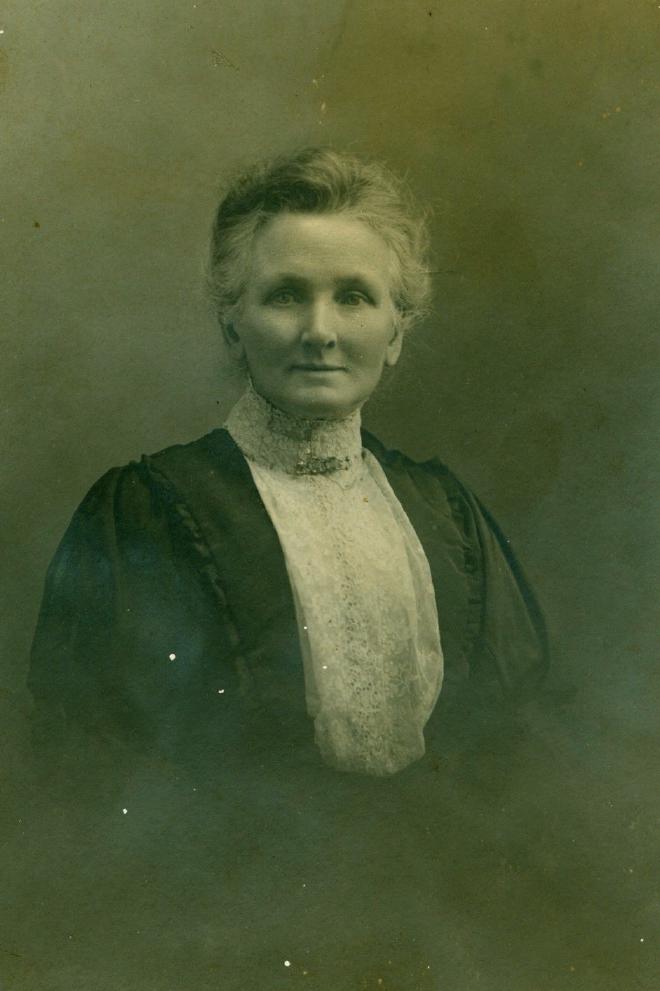
Jane Givan was ten years old when she arrived in Melbourne in 1859, the youngest of four siblings. Her mother died three years later, with her father quite old (just over seventy). It seems clear that her oldest sister Ann would have run the house and brought up her younger siblings. The family was determined Presbyterians, and her two sisters married Scots immigrants, clearly Presbyterians. At age 21, Jane married John McMahon, a dashing Irish Catholic, in two marriage ceremonies, one Catholic and one Presbyterian. One suspects that the two priests were unaware of the other, as no firm-thinking Catholic priest or Presbyterian minister would have conformed with the arrangement. Subsequently the children were all educated at Catholic schools (which meant that they were firmly baptised as Catholics).
Jane had ten children, first seven girls and then three boys. Two of the girls died young (in October 1876) of diphtheria.
Trish Meldrum’s memoir reports that Jane was an invalid for her last three years, and lived with her medical doctor son John Joseph towards the end (presumably for in-house medical care). She died in 1915, aged 67.
We have a small collection of mementos and letters that passed down from Jane, to her youngest daughter Eily, to Eily’s daughter Sheila, and are now held by Sheila’s eldest daughter Kerry.
The first is an acrostic poem written to Jane by her brother John, and dated 3 November 1865. Jane would have been 17. It shows that John had a very good hand, and indicates that they were well-educated back in County Tyrone.
The second is a pair of dance cards from a Grand Ball and Supper held by the St. Patrick’s Society on 17 March 1868 (St. Patrick’s Day).
Tickets:- Double, 20s,; Gentleman’s, 15s.; Ladies’, 10s. Mr Denning and his Quadrille band has been engaged.
Clearly, one corresponded to John and the other corresponded to Jane. About half their programme was taken up with each other. Jane must have kept them as a souvenir of their courting.
It was the time of a significant political event. On 12 March (five days before) an assassination attempt was made in Sydney on Prince Alfred, the second son of Queen Victoria, who was making the first royal tour of Australia. The would-be assassin, James O’Farrell, self-identified as a Fenian. Justice was nothing but swift. He was tried, sentenced, convicted and hanged by 21 April.
The event triggered considerable feedback against the Irish-Australian community. In Sydney, the St. Patrick’s Day ball was cancelled. In Melbourne, they stressed their loyalty. The third toast at the Supper was The speedy recovery, health and happiness of Prince Alfred. The toast was made by Charles Gavan Duffy, and reported in full in The Argus. The Herald of 20 March 1868 was unimpressed.
The third is a dance card asscoiated with a Complimentary Return Ball on 2 August 1881. This seems to be a ball given by the Fitzroy City Council to the mayor. It seems to follow an earlier Invitation Ball that was given by the mayor, perhaps at his own expence.
The Australasian Sketcher with Pen and Pencil of 16 July 1881 reported briefly
A BRILLIANT ball was given by the mayor of Fitzroy, Mr. McMahon, in the local town-hall on July 5.
In the event the return ball was a great success. There were 246 guests, they enjoyed a “very excellent supper” at midnight, and after speeches returned to the dance floor until 4:00 am. The citizens of Fitzroy, it seems, didn’t do things by half.
Finally, we have a small collection of letters written by Jane to her youngest daughter Eily. They relate various family doings, but contain not a mention of her husband John. It seems that they were estranged in some sense.
The Argus of 21 September 1915 reported:
McMAHON. On the 18th September, at the residence of her son, John, 15 Princess street, Kew, Jane, beloved wife of John McMahon, and dearly loved mother of Margaret, Annie, Ethel, Geraldine, Eilly, John, Leo, and Frank. (Interred privately, September 20.)
Rest in peace
Grandparent Generation#
Margaret Mary McMahon (1871-1951)#
Born 13 May 1871, at Robert Givan’s house at Davies Street, South Yarra (before John and Jane McMahon moved to Fitzroy). She died 30 July 1951.
Jane Ellen McMahon (1873-1876)#
Annie Catherine McMahon (1873-1939)#
Twins. Born 21 May 1873 at Maynooth Cottage, North Fitzroy. Jane died of diphteria 23 October 1876, aged 3 years and 5 months. Annie died 24 July 1939, after surgery for goitre. She had been advised that she had only a 50-50 chance of surviving the surgery.
Etheldreda McMahon (1877-1971)#
Born 25 July 1877 at 99 Brunswick St. Fitzroy. Etheldreda (Nett) married Franz (Frank) Schieblich on 27 February 1917. A bay girl was stillborn, on 18 November 1918.
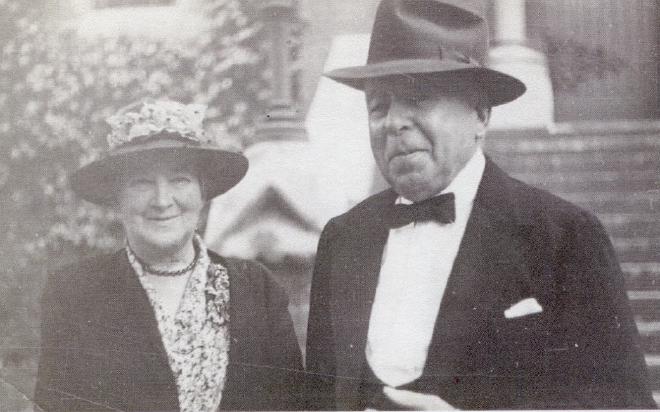
She died 25 February 1971, the last of her siblings. The Age of 1 March 1971 reported:
SCHIEBLICH (McMahon). On February 25th, Ethel Reda, dearly beloved and loving wife of the late Franz Ottomer Schieblich, aged 91 years.
SCHIEBLICH (McMahon). On February 25th, Ethel Reda, loved second daughter of John and Jane McMahon. Her brothers and sisters all predeceased her. They were: Margaret (Mrs Serong), Geraldine (Sister Mary Patrick), Nan (Mrs Kelly), Eily (Mrs O’Hanlon), John, Leo and Frank, aged 93 years.
She was greatly loved and respected.
Geraldine McMahon (1881-1970)#
Born 17 August 1881 at 101 Briswick St, Fitzroy. Entered the Presentation Convent at Wagga in 1904 (Sister Mary Patrick). Died at 18 November 1970, at Wagga.
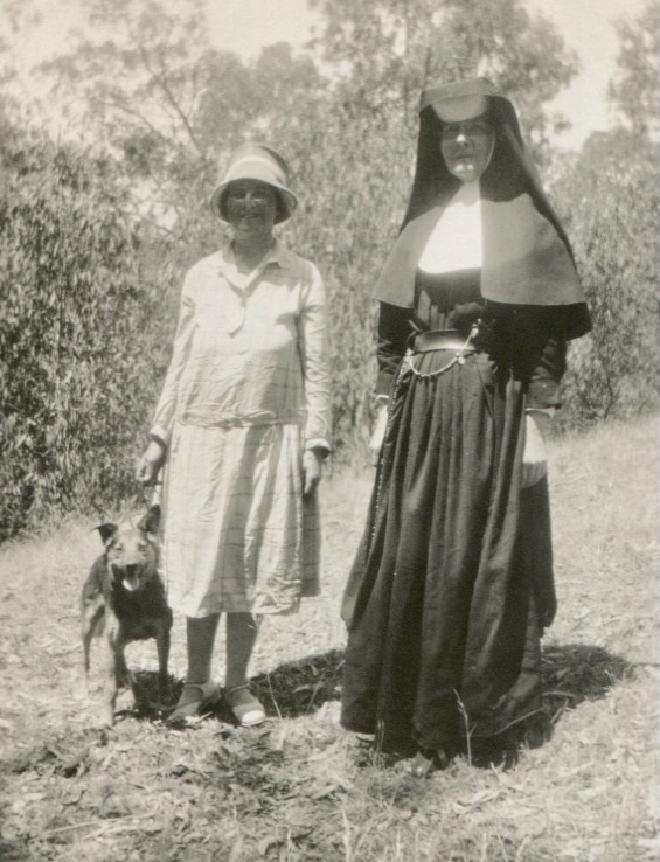
The photograph is annotated: 8 January 1930. Near “Black Rock”, NSW. 104F in the shade.
Eily Erina McMahon (1883-1956)#
Born 5 July 1883, at 101 Bruswick St, Fitzroy.
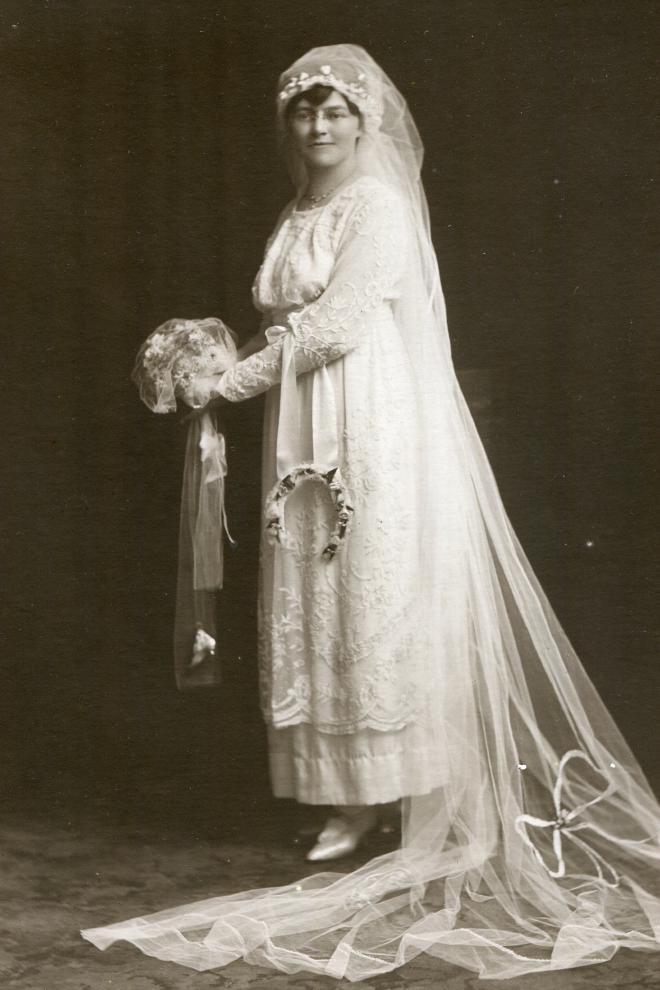
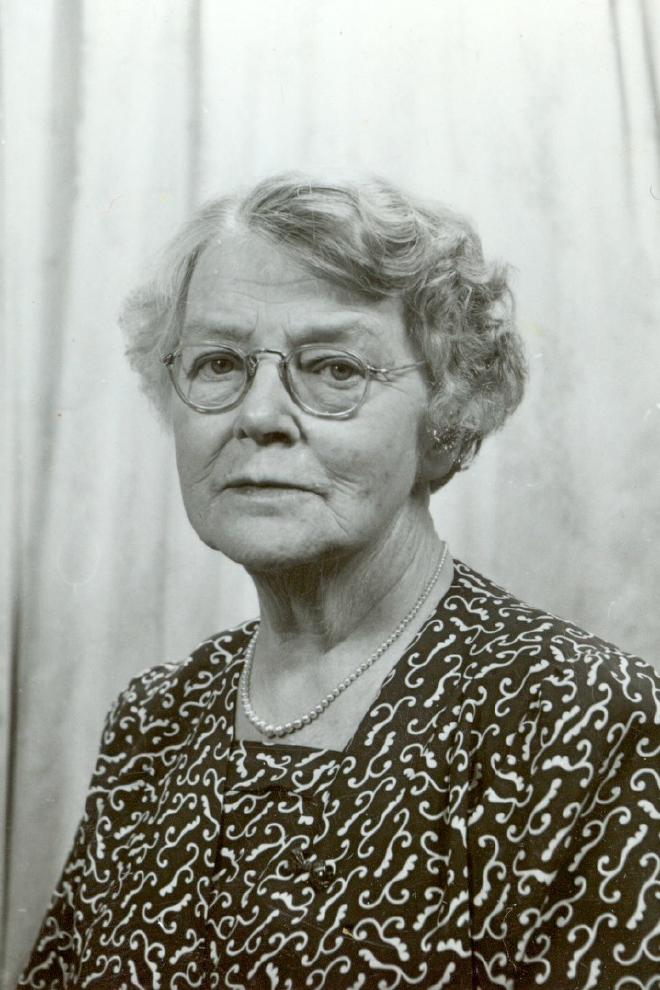
Died 14 November 1956, at her home at Quirading, WA.
John Joseph McMahon (1886-1945)#
Born 13 March 1886, at 101 Brunswick St, Fitzroy. Died 14 March 1945.
We have an
obituary
in The Medical Journal of Australia of June 1945, that is, somewhat surprsingly, freely accessable online.
Leopold Luke McMahon (1888-1957)#
Born 30 October 1888, at Smith St, Northcote. Died 14 March 1957.
From the British Medical Journal of 1957:
L.L. McMAHON, M.B.
Dr. L. L. McMahon, of Whitchurch, Glamorgan, died at his home there on March 10 at the age of 68. Leo Luke McMahon was born on October 31, 1888, and studied medicine at the Univesity of Melbourne, where he graduated M.B., B.S. in 1915. After the first world war he came to Britain and settled in general practice at Whitchurch, where he remained until his death.
C.W.S. writes: Dr. L. L. McMahon was one of the large army of general practitioners who shun the limelight, do their duty, and leave behind them a sweet-smelling memory. “Mac” was always a joy to his patients and friends - solid, four-square, uncompromising, and kindly. Uprightness and common sense were the twin poles of his being, and in his last long illness his courage was amazing. He made no concession to the enemy, worked to the last day, and died, as he wished, in harness. For the lighter side, golf was his passion : unothodox in style, he was a dangerous opponent because he never admitted defeat. He leaves a widow and one son, who is a medical student,
Frank Fitzroy McMahon (1889-1954)#
Born 25 September 1899, at the home of Luke McMahon, at Maynooth, Co Kildare, Ireland, during the visit of John and Jane McMahon to Ireland.
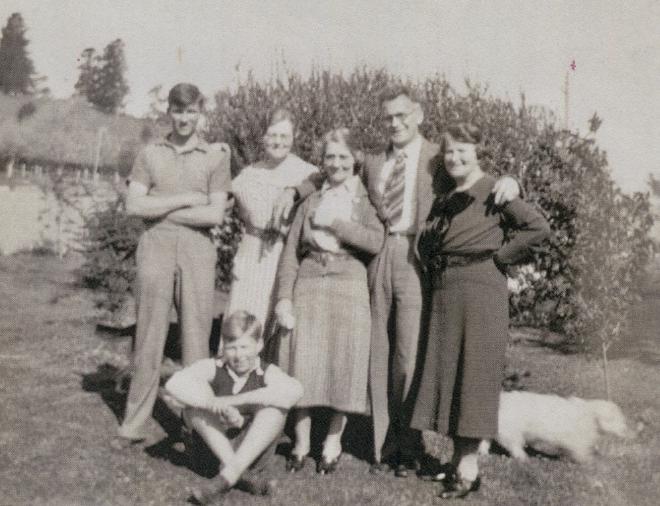
Died 25 August 1954.